

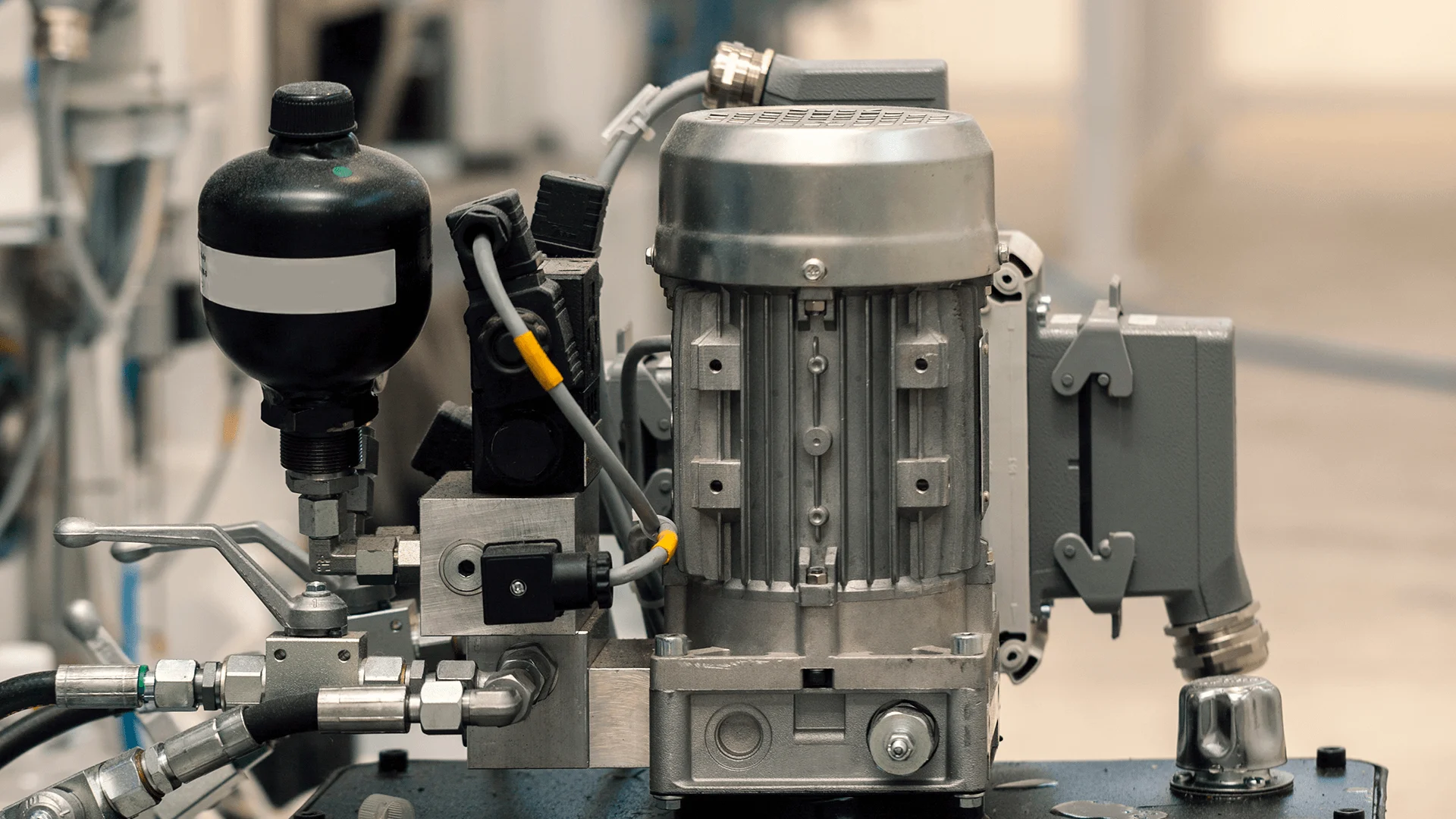
How a Hydraulic Power Unit Works
An HPU converts mechanical energy (from an electric motor or combustion engine) into hydraulic energy by pressurizing fluid. The pressurized fluid travels through hoses and valves to actuators, where it’s converted back into force or motion. A basic cycle looks like this:
- Fluid Intake: Pump draws fluid from the reservoir.
- Pressurization: Pump forces fluid into the circuit under high pressure.
- Flow Control: Valves direct and regulate flow to actuators.
- Return: Fluid returns to reservoir, dissipating heat and releasing entrained air.
Compared with simple pumps, HPUs often add multi-stage pressurization, filtration, and temperature control for demanding duty cycles.
Main Components of a Hydraulic Power Unit
1) Hydraulic Pump
Converts mechanical power into hydraulic energy.
- Gear pumps: compact, economical; moderate pressure/flow.
- Vane pumps: smooth & quiet; medium pressure.
- Piston pumps: high pressure/efficiency; variable displacement options.
2) Motor (Prime Mover)
- Electric motors: efficient, precise speed control, low maintenance.
- Diesel / gasoline engines: ideal off-grid/mobile; typically sized ~2–2.5× the electric HP equivalent to achieve comparable torque under load.
3) Reservoir (Tank)
Stores fluid for cooling, deaeration, and contaminant settling. Proper sizing helps prevent cavitation and temperature spikes.
4) Accumulators
Pressurized storage that smooths pressure fluctuations, supports peak demand, and provides emergency energy.
5) Filtration
Return-line, pressure-line, and off-line (“kidney-loop”) filters remove particles. Clean fluid is critical for long component life.
6) Cooling & Heating
Air or liquid coolers remove heat; immersion/oil heaters maintain viscosity in cold environments.
7) Valves & Manifolds
- Directional valves route flow.
- Flow valves adjust actuator speed.
- Pressure relief/regulators protect against over-pressure.
8) Electronic Controller
Panels or PLCs provide start/stop, pressure/temperature monitoring, fault alarms, and diagnostics.
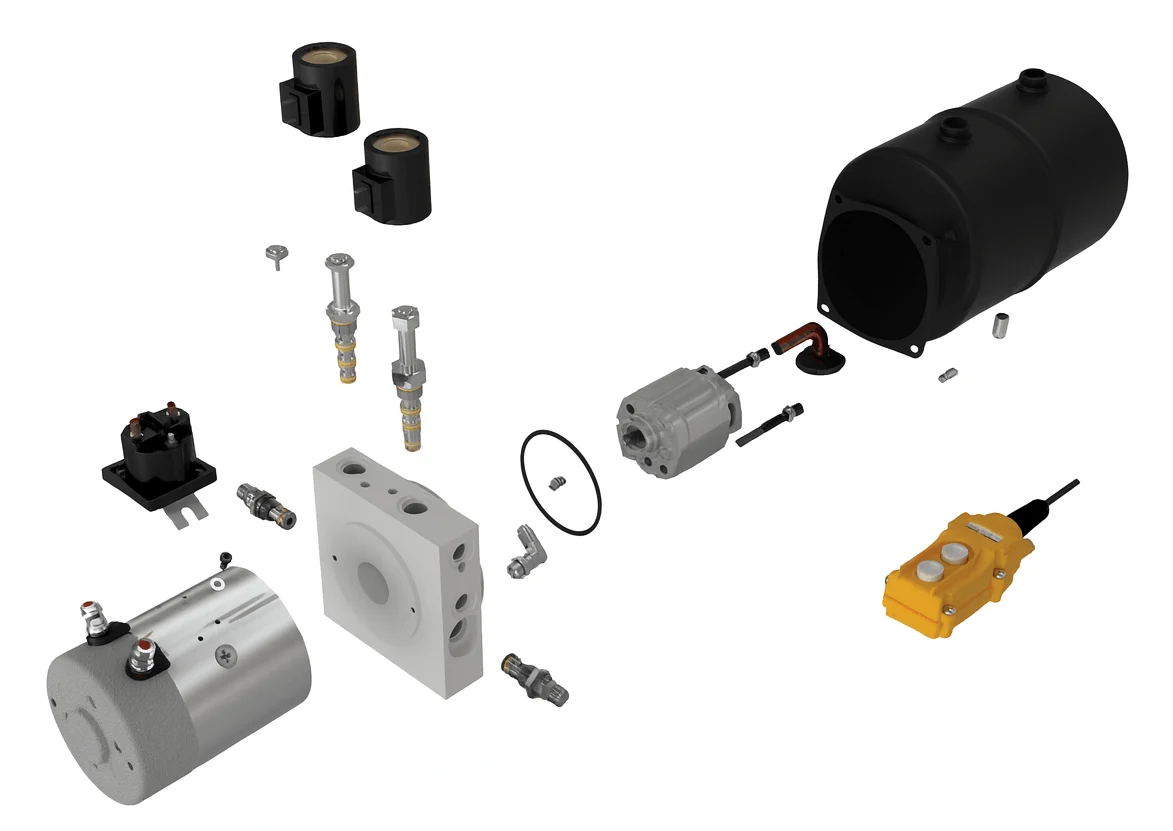
Energy Conversion & Efficiency
Mechanical → Hydraulic → Mechanical: the motor delivers torque to the pump; the pump pressurizes fluid; actuators convert pressure/flow into linear or rotary motion. Overall efficiency depends on pump design, component quality, fluid condition, and thermal management.
Selecting the Right HPU
- Pressure rating (PSI) and flow rate (GPM)
- Reservoir volume (often 3–5× pump flow per minute)
- Motor power (HP) — based on pressure × flow / 1714 ÷ efficiency
- Size/weight and mounting constraints
- Power source: electric vs. diesel/gas for the site conditions
- Controls & sensors: PLC integration, alarms, telemetry
Applications
| Industry | Common Uses |
|---|---|
| Industrial Manufacturing | Presses, injection molding, conveyors, metal forming, automation |
| Construction & Mining | Excavators, loaders, cranes, drilling rigs |
| Aerospace & Defense | Landing gear, flight controls, cargo doors |
| Marine | Winches, stabilizers, steering gear |
| Agriculture | Tractors, combines, plows, irrigation |
| Motorsport & Testing | Hydraulic jacks and lift systems |
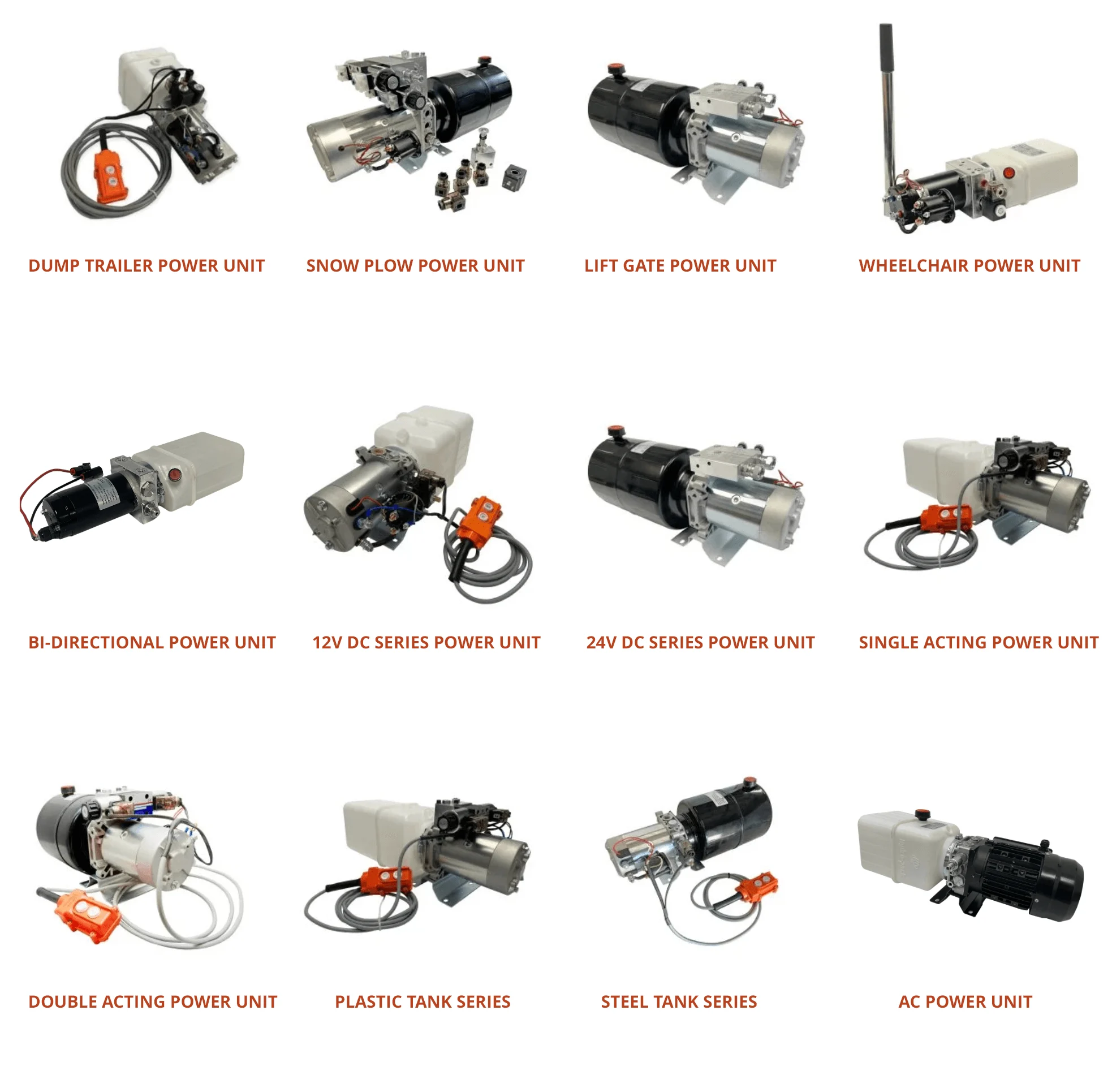
Advantages & Limitations
| Aspect | Advantages | Considerations |
|---|---|---|
| Power Density | High output in compact form | — |
| Control Precision | Smooth, accurate force & motion | Requires proper setup/tuning |
| Durability | Handles heavy, continuous loads | Needs regular maintenance |
| Efficiency | High mechanical efficiency | Losses via heat & friction |
| Environmental | Biodegradable fluids available | Leak containment & disposal plans needed |
Maintenance & Troubleshooting
Routine Practices
- Change hydraulic fluid on schedule; monitor condition.
- Replace filters (return, pressure, off-line) regularly.
- Inspect hoses, seals, and fittings; fix leaks promptly.
- Track operating temperature and pressure; clean coolers.
- Keep reservoirs and breathers clean to reduce contamination.
Common Issues & Fixes
| Problem | Cause | Solution |
|---|---|---|
| Contaminated fluid | Dirty oil or clogged filters | Replace fluid & filters; check breathers |
| Overheating | Insufficient cooling or low fluid | Service cooler; restore fluid level; verify viscosity |
| Low pressure | Pump wear or internal leakage | Inspect pump, seals, and relief settings |
| Noise/vibration | Air entrainment or misalignment | Bleed system; realign couplings; check mounts |
Conclusion
A well-designed hydraulic power unit is the heart of a hydraulic system—converting energy into precise, controllable motion. With proper sizing, smart controls, and proactive maintenance, HPUs deliver outstanding power density, efficiency, and reliability across industrial, mobile, aerospace, marine, and agricultural applications.